
Omega-3: What EPA, DHA, and ALA Actually Do for You
Omega-3 is a family name, and treating it as one ingredient is the first mistake this page exists to correct. ALA from your salad oil, EPA and DHA from a piece of salmon, and the capsule labeled fish oil are related but not interchangeable, and your body barely converts the first into the other two. This guide plays a supporting, component role on Staminastack on purpose: omega-3 is background nutrition that shows up inside bigger stacks, not a headline act. Get the basics right here — which fatty acid, from which source, at what amount, with what safety ceiling — and the dose questions in our [EPA and DHA dosage](/ingredients/epa-and-dha-dosage/) guide and the source debate in [fish oil vs algae oil](/ingredients/fish-oil-vs-algae-oil/) will make immediate sense.
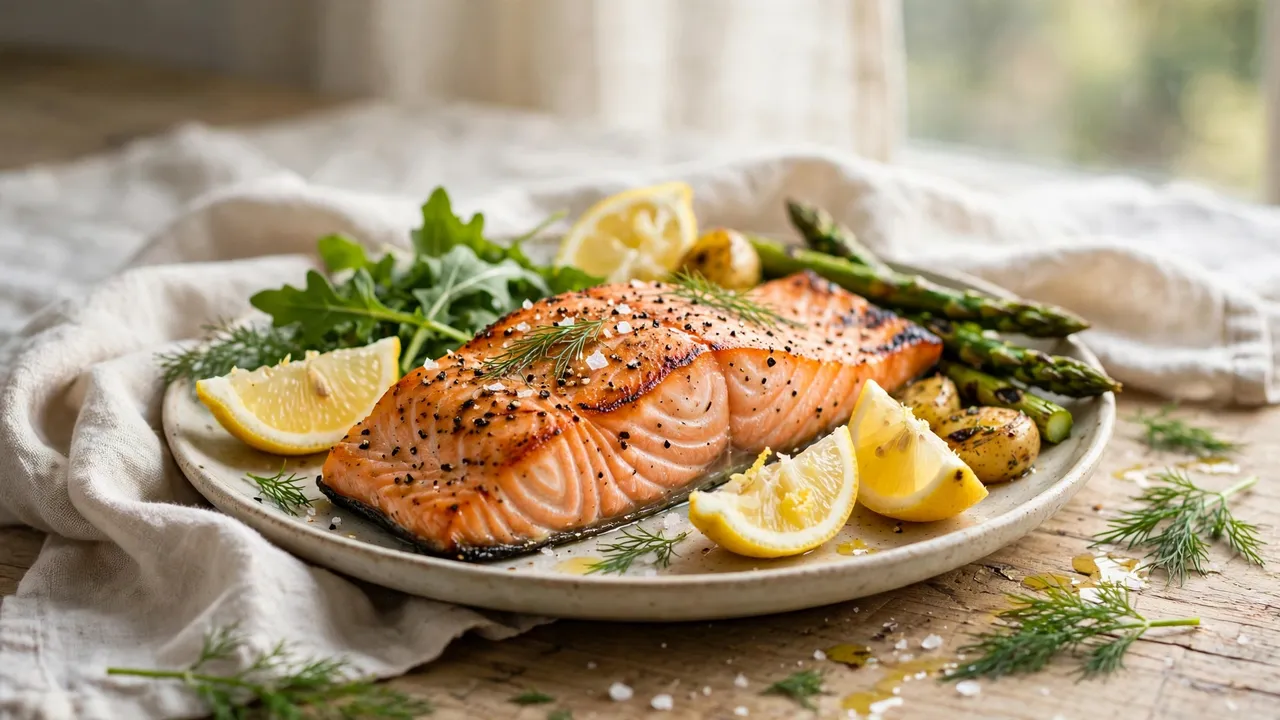
Omega-3 is a family name, and treating it as one ingredient is the first mistake this page exists to correct. ALA from your salad oil, EPA and DHA from a piece of salmon, and the capsule labeled fish oil are related but not interchangeable, and your body barely converts the first into the other two. This guide plays a supporting, component role on Staminastack on purpose: omega-3 is background nutrition that shows up inside bigger stacks, not a headline act. Get the basics right here — which fatty acid, from which source, at what amount, with what safety ceiling — and the dose questions in our EPA and DHA dosage guide and the source debate in fish oil vs algae oil will make immediate sense.
What are the three omega-3s, and where does each live?
Alpha-linolenic acid — ALA — is the plant omega-3, found mainly in flaxseed, soybean, and canola oils, plus chia seeds and walnuts. It is the essential one: your body cannot make it, so it must come from food. Eicosapentaenoic acid (EPA) and docosahexaenoic acid (DHA) are the long-chain marine omega-3s, found in fish and other seafood — richest in oily fish such as salmon, mackerel, sardines, and anchovies — and produced originally by microalgae, which is why algae oil supplements can supply them without fish.
The NIH Office of Dietary Supplements states the conversion problem in one sentence worth memorizing: your body can convert some ALA into EPA and then to DHA, but only in very small amounts, so getting EPA and DHA from foods or supplements is the only practical way to raise their levels. Omega-3s are structural before they are anything else — components of the membranes around every cell, with DHA levels especially high in the retina, brain, and sperm cells — and they feed into signaling molecules that operate across the heart, blood vessels, lungs, immune system, and hormone systems. That breadth explains both the genuine nutritional importance and the inflated claim culture: a nutrient involved everywhere gets credited with fixing anything.
| Omega-3 | Main sources | Official US intake value | Practical note |
|---|---|---|---|
| ALA | Flaxseed, chia, walnuts, canola and soybean oils | AI: 1.6 g/day men; 1.1 g/day women | Essential; easy to meet from food |
| EPA | Oily fish, fish oil, some algae oils | No official value set | Guidance often 250 to 500 mg/day EPA+DHA combined |
| DHA | Oily fish, fish oil, algae oil | No official value set | Concentrated in retina and brain |
How much do you need, and what does food deliver?
Experts have not established recommended amounts for EPA and DHA; only ALA carries Adequate Intakes, listed by NIH ODS as 1.6 grams a day for men and 1.1 grams for women, with 1.4 grams in pregnancy and 1.3 grams while breastfeeding. For EPA and DHA, food guidance does the work. The Dietary Guidelines for Americans advise adults to eat eight ounces or more of a variety of seafood weekly, and the American Heart Association’s longstanding advice is two servings of fish a week, preferably fatty fish — a pattern that lands most people near the 250 to 500 mg a day of combined EPA and DHA that expert bodies such as EFSA and WHO commonly reference. One three-ounce serving of salmon delivers roughly 0.7 to 1.5 grams of EPA plus DHA depending on species, several days’ worth of that guidance in a single meal. Lean fish and shellfish are excellent foods but poor omega-3 sources by comparison, delivering a few hundred milligrams or less.
Supplements, then, have a narrow honest job: cover people who eat little or no seafood, dislike oily fish, or avoid animal products. A standard fish oil softgel typically provides about 180 mg of EPA and 120 mg of DHA — 300 mg combined — which is why labels shouting 1,000 mg of fish oil per capsule mislead: the oil weight is not the omega-3 dose. Read the EPA and DHA lines, always. Our dosage guide breaks down amounts by goal, including why the 2 to 4 gram range belongs to prescription care for high triglycerides and not to self-directed stacking.
What does the evidence support — and what stays uncertain?
A true omega-3 deficiency is very rare in the United States, per NIH ODS, and most people get enough ALA plus small amounts of EPA and DHA from food. Beyond basic nutrition, the evidence thins quickly, and the NIH and NCCIH summaries are admirably blunt about it: uncertain whether supplements help depression, no improvement in thinking for people already diagnosed with Alzheimer’s disease, and mixed cardiovascular findings across large trials. Where omega-3s do have a firm medical role — lowering very high triglycerides at 2 to 4 grams a day — it is delivered through regulated prescription products under supervision, sometimes with a small increase in atrial fibrillation noted in high-dose trials among people with cardiovascular disease or high risk.
So the component framing is the correct one. Omega-3 adequacy supports normal membrane, eye, and brain nutrition the way adequate protein supports muscle: necessary background, poor headline. On Staminastack it appears as a sensible foundation for adults who rarely eat fish — including inside the age-focused stacks where background nutrition matters most — never as a treatment claim for heart disease, mood, joints, or cognition. If a seller’s omega-3 page reads like a drug label’s promise list, you are reading marketing, and the NIH consumer fact sheet is the free antidote.
How do you choose a supplement, if you need one?
Decide the source first: fish oil if you eat fish and want the deepest trial history and lowest cost per milligram, algae oil if you are vegan, vegetarian, allergic to fish, or averse to fishy reflux — our fish oil vs algae oil comparison covers bioavailability, EPA-to-DHA ratios, and contaminant profiles in full. Then read the label for EPA plus DHA per serving, not oil per capsule, and divide by servings per day to get your true daily amount. Triglyceride-form oils are absorbed well with a meal containing fat; ethyl-ester forms catch up when taken with food. Take capsules with meals regardless — most of the classic complaints, from fishy burps to heartburn, shrink when the dose rides on dinner instead of an empty stomach.
Quality signals are concrete: third-party testing for oxidation and contaminants, a stated EPA and DHA content, and storage away from heat and light, since these fats oxidize readily. A rancid capsule fails before it starts. Cost per 1,000 mg of EPA plus DHA is the honest price metric across brands, and algae oil legitimately costs more per milligram — the premium buys diet compatibility and a controlled-environment source, not superior absorption.
How does omega-3 fit inside a wider stack?
On this site omega-3 appears the way it appears in real nutrition: in the background of stacks built for other headlines. In the over-40 guides, for example, it sits alongside protein adequacy and vitamin D as part of the nutritional floor for men whose fish intake is low — see how it is framed inside supplements for men over 40. That placement is deliberate. A component earns trust by being adequate, verified, and boring, and it loses trust the moment a seller promotes it to a therapy for the stack’s headline condition. Omega-3 adequacy will not sharpen your focus this afternoon or deepen tonight’s sleep. It will, over months, normalize a genuine dietary gap for the large share of adults who rarely eat oily fish.
That framing also disciplines how much effort it deserves. Confirm your intake pattern, close the gap with food where you can, supplement the difference at the modest doses in our dosage guide if you cannot, and then stop thinking about it. The nutrients that reward obsessive optimization are rare, and omega-3 is not one of them. Spend the attention you save on the parts of your stack where dose and timing genuinely move outcomes — and on the unglamorous foundations, sleep and training and total diet quality, that move them most.
Who should not take this?
Omega-3 supplements are a check-first for several groups. Talk to your doctor or pharmacist before supplementing if you take warfarin or any other anticoagulant or antiplatelet medicine, have a bleeding disorder, or face surgery: the NIH notes high intakes of EPA and DHA may increase bleeding risk alongside blood thinners, and doses of 2 to 15 grams a day have been reported to increase bleeding time by reducing platelet aggregation. Do not exceed the amounts the FDA treats as generally safe — the NIH consumer guidance cites an FDA conclusion that EPA and DHA from supplements are safe up to 5 grams a day, while FDA labeling guidance has historically capped recommended supplement intake at 2 grams a day; treat anything approaching those ceilings as medical territory, not a goal. People with fish or shellfish allergy should avoid fish oil and choose algae oil only with clinician guidance; people who are pregnant or breastfeeding or considering supplements for children should follow clinician and FDA fish advice, favoring lower-mercury choices. High-dose omega-3s are prescription care. Talk to your doctor or pharmacist before starting, especially if you take any regular medication.
Frequently asked questions
What is the difference between ALA, EPA, and DHA?
ALA comes from plant oils, flaxseed, and walnuts. EPA and DHA come from fish and other seafood, and from algae oil. DHA concentrates in the retina, brain, and sperm cells. The NIH notes your body converts only very small amounts of ALA into EPA and then DHA.
How much omega-3 do I need each day?
The only official US values are Adequate Intakes for ALA: 1.6 g a day for men and 1.1 g a day for women, per NIH ODS. No official value exists for EPA and DHA; expert guidance commonly points to about 250 to 500 mg a day of combined EPA and DHA for general health.
Can I get enough omega-3 from flaxseed alone?
You can meet the ALA target with ground flaxseed, chia, walnuts, and canola or soybean oil. But because ALA conversion to EPA and DHA is very limited, flax alone will not reliably raise EPA and DHA levels. That is why algae oil exists for people who eat no fish.
Is fish oil safe to take every day?
At typical doses, side effects are usually mild — fishy taste, heartburn, nausea, stomach upset, diarrhea, headache. The FDA concludes supplements supplying up to 5 g a day of EPA plus DHA are generally safe, but high doses can increase bleeding risk with blood thinners, so check first if you take them.
Do omega-3 supplements treat heart disease or depression?
No. The NIH and NCCIH summaries find the evidence mixed or uncertain for many conditions, and supplements are not treatments. Prescription omega-3 products for very high triglycerides are medicines used under a doctor's care — a different category from store-bought fish oil.