
The Sleep Stack: Magnesium, L-Theanine and Glycine, Honestly
If your brain will not switch off at night but you sleep fine once you are out, this stack is built for you. The honest bottom line up front: these three ingredients will not knock you out, and the trial effects are modest. What they can do is cover a genuine magnesium shortfall, quiet a busy mind, and support the temperature drop your body uses to start sleep — without melatonin, without a morning hangover, and without doses invented by a marketing department.
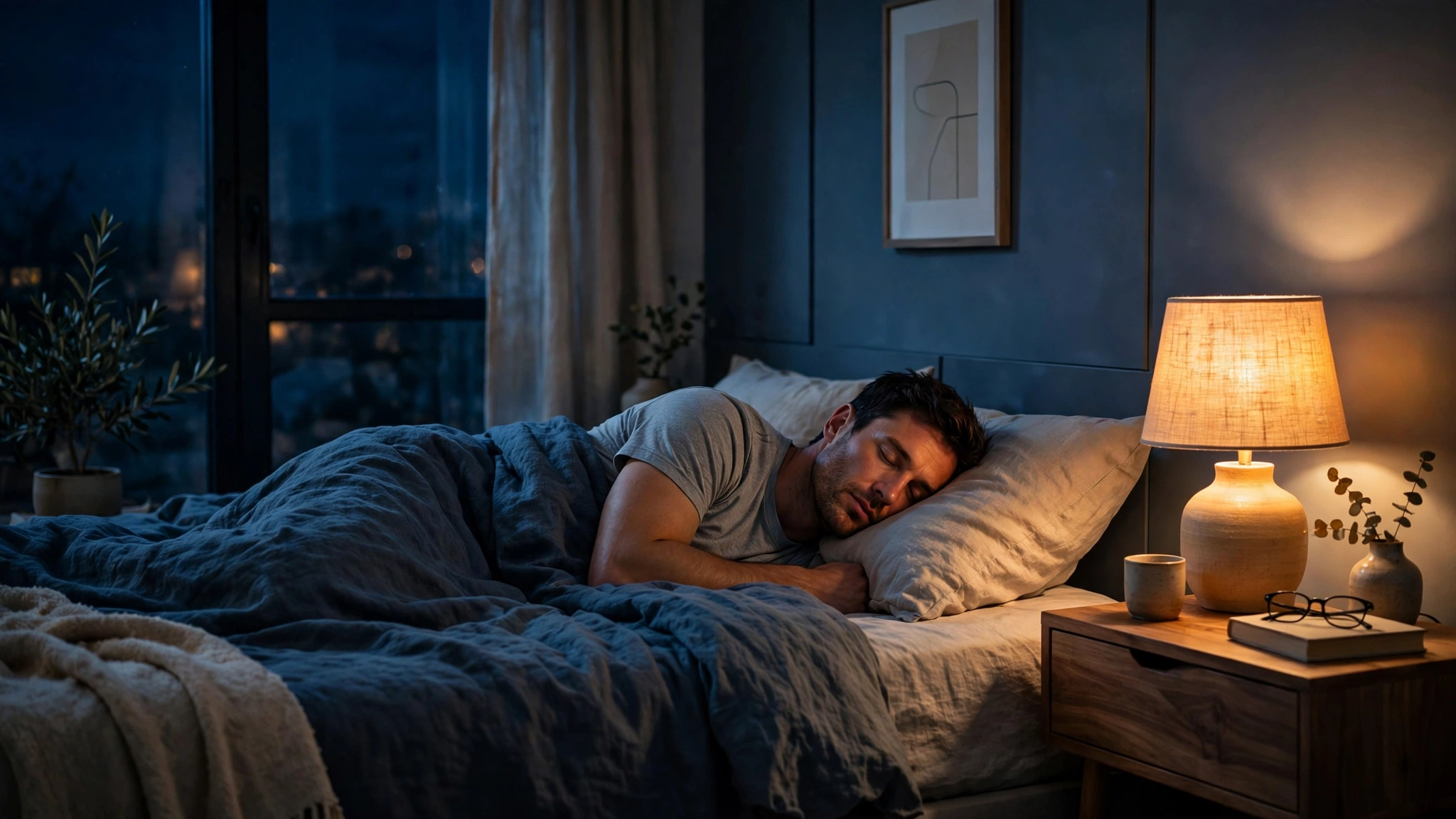
If your brain will not switch off at night but you sleep fine once you are out, this stack is built for you. The honest bottom line up front: these three ingredients will not knock you out, and the trial effects are modest. What they can do is cover a genuine magnesium shortfall, quiet a busy mind, and support the temperature drop your body uses to start sleep — without melatonin, without a morning hangover, and without doses invented by a marketing department.
What is in this sleep stack, and why these three?
Most sleep blends are a label-reading exercise: twenty ingredients at sprinkle doses, none of them at the amount used in any study. This one is deliberately short. Each ingredient earned its place with human trial data at a dose you can actually buy and measure.
| Ingredient | Evening dose | Timing | Its job in the stack |
|---|---|---|---|
| Magnesium glycinate | ~200 mg elemental magnesium | With dinner or after | Covers a common dietary shortfall; supports normal muscle and nerve function |
| L-theanine | 200 mg | 30–60 min before bed | Calm without sedation; takes the edge off mental chatter |
| Glycine | 3 g | 30–60 min before bed, in a warm drink | Supports the core-temperature drop linked to sleep onset |
Magnesium does the foundational work. The NIH Office of Dietary Supplements lists the adult RDA at 400–420 mg a day for men and 310–320 mg a day for women, from all sources — and its analysis of US survey data found 48% of Americans get less than their estimated requirement from food and drink alone. If you are in that half, a supplement has something real to fix. If you are not, expect less. The form matters more than the headline milligrams, which is why the stack uses magnesium glycinate and not the cheap oxide that fills most blends — the head-to-head logic is laid out in magnesium glycinate vs oxide.
L-theanine is the wind-down piece. It is an amino acid from tea leaves, and it does not sedate you. In the best-known trial, 200 mg a day for four weeks improved Pittsburgh Sleep Quality Index scores in healthy adults, with the clearest gains in how long it took to fall asleep and how disturbed the night felt. The full picture, including the focus angle, is in the L-theanine deep-dive.
Glycine is the quiet one. In small placebo-controlled trials, 3 g taken before bed improved how rested people felt the next morning and shortened the time to fall asleep on sleep-lab recordings, without changing the structure of sleep itself. It is also dirt cheap, which is probably why nobody advertises it. Details and caveats live in glycine for sleep.
What does the evidence actually show?
Read the magnesium sleep literature and you find a pattern: small trials, small effects, biggest responses in people who started low.
The most-cited summary is a 2021 meta-analysis in BMC Complementary Medicine and Therapies. It pooled three randomised trials in 151 older adults with insomnia and found magnesium cut the time to fall asleep by about 17 minutes versus placebo. Total sleep time rose by about 16 minutes, but that difference was not statistically significant, and the authors rated the evidence low to very low quality. That is the honest headline: promising, not proven.
A newer trial is more directly relevant to this stack. In 2025, researchers published a randomised, placebo-controlled trial in Nature and Science of Sleep: 155 adults who reported poor sleep took 250 mg of elemental magnesium as bisglycinate — the same chelated form sold as glycinate — or a placebo for four weeks. Insomnia Severity Index scores fell by 3.9 points on magnesium and 2.3 on placebo. The difference was statistically significant but small, and the improvement was most pronounced in people whose diets were lowest in magnesium at the start. Both halves of that sentence matter.
Theanine’s evidence is thinner but consistent. A 2019 randomised trial in Nutrients gave 30 healthy adults 200 mg a day for four weeks and found improvements in sleep latency, sleep disturbance and reduced use of sleep medication on the PSQI. A later systematic review of 13 trials and 550 participants concluded that 200–450 mg a day appears to support sleep quality in adults. Nobody has run a large, long theanine trial. What exists points the same way, at a dose of 200 mg.
Glycine’s trials are the smallest of the three — mostly 10 to 30 people, largely from one Japanese research group — and they agree with each other: better subjective sleep quality, less next-day fatigue, faster sleep onset on recordings, no change to sleep architecture. Promising and consistent is the right label, not definitive.
What has never been tested is this exact three-ingredient combination in one trial. Anyone who tells you the stack itself is “clinically proven” is selling you something. The ingredients have data; the combination has logic.
How do you run the stack each night?
Timing beats total dose here. Magnesium glycinate goes with dinner or just after — it is gentle on the stomach, and taking it with food suits most people. Theanine goes 30 to 60 minutes before bed, when you start dimming the evening down. Glycine goes in a warm drink at the same window; it tastes faintly sweet and dissolves cleanly.
Start with one ingredient for three or four nights, then add the next. That way, if something disagrees with you, you know which one it was. The full ramp-in schedule, including what to do on nights it seems to fail, is in the sleep stack doses protocol page.
Two habits will swamp anything in a capsule, so fix them first or do not bother: caffeine after midday, and alcohol as a nightcap. Alcohol in particular fragments the second half of the night no matter what you stack on top of it.
Why is there no melatonin in this stack?
Three reasons. First, melatonin is a hormone, not a nutrient, and the doses on US shelves often run far above what the body produces. Second, it is prescription-only in the UK and much of Europe, so a stack built on it is useless to half our readers — the UK version of this guide is the sleep stack UK page. Third, plenty of people report next-morning grogginess from it. This stack supports the signals your body already uses — mineral status, a calmer mind, a falling core temperature — instead of overriding them with a hormone.
Who should not take this?
Do not treat “available without a prescription” as “safe for everyone.” Skip this stack, or clear it with your doctor or pharmacist first, if any of these apply:
- Kidney disease. Your kidneys clear excess magnesium. The NIH is blunt that people with impaired kidney function are the group at real risk from magnesium supplements. This is the single most important line in this section.
- Pregnancy or breastfeeding. There are no adequate safety trials of supplemental L-theanine or glycine at these doses in pregnancy. The default is avoid, unless your own clinician says otherwise.
- Under 18. None of these ingredients has been studied as a nightly sleep stack in children or teenagers. This page is written for adults.
- Blood-pressure medication or low blood pressure. L-theanine may lower blood pressure slightly, which can add to the effect of antihypertensive drugs.
- Sedatives and sleep medication. Theanine is not a sedative, but combining anything that promotes drowsiness with benzodiazepines, Z-drugs or sedating antihistamines deserves a pharmacist’s check first.
- Antibiotics and osteoporosis medication. Magnesium blocks the absorption of tetracycline and quinolone antibiotics and of oral bisphosphonates. The NIH advises taking antibiotics at least 2 hours before, or 4 to 6 hours after, a magnesium supplement, and separating bisphosphonates by at least 2 hours.
- Clozapine. ConsumerLab notes glycine may reduce its effectiveness. If you take it, do not add glycine without your psychiatrist’s knowledge.
Magnesium from supplements also has a ceiling: the US tolerable upper intake level is 350 mg of elemental magnesium a day from supplements and medicines (food does not count toward it). The first sign you have overshot is usually digestive — loose stools, nausea, cramping. The stack dose of about 200 mg sits comfortably under that ceiling, but check any other products you take, because magnesium hides in antacids, laxatives and multivitamins.
Talk to your doctor or pharmacist before starting if any of the above is even close to your situation. That is not boilerplate; it is the cheapest safety step there is.
How do you judge whether it is working?
Give it four weeks, and score it properly. Note two numbers each morning for the first week before you start, if you can: roughly how long you took to fall asleep, and how rested you feel at mid-morning on a simple 1-to-10 scale. Repeat in week four. Wearable sleep scores can help, but treat them as a rough guide — they estimate sleep stages, they do not measure them.
If the numbers moved and the mid-morning feeling is better, the stack is earning its keep. If nothing changed, the most likely explanation is that your magnesium intake was fine and your problem lives elsewhere: sleep timing, light, stress load, or a disorder like apnoea or restless legs that no supplement touches. In that case the right move is a conversation with your doctor, not a fourth ingredient.
The stack, product by product
| Product | Form | Dose | Third-party tested | Where to buy |
|---|---|---|---|---|
| Thorne Magnesium Bisglycinate | Powder, chelated bisglycinate | 200 mg elemental magnesium per scoop, evening | NSF Certified for Sport | iHerb Brand site Amazon |
| Momentous Magnesium Bisglycinate | Capsules, chelated bisglycinate | 200 mg elemental magnesium per 2 capsules, 30–60 min before bed | NSF Certified for Sport | Brand site |
| NOW L-Theanine 200 mg Double Strength | Capsules | 200 mg, 30–60 min before bed | Check label | iHerb Brand site Amazon |
| NOW Glycine Pure Powder | Powder | 3 g in a warm drink before bed | Check label | iHerb Brand site Amazon |
Prices change constantly, so we don't print them — check the current price at the retailer. We only list products that publish third-party testing (NSF, Informed Sport, or USP) where a certified option exists.
Frequently asked questions
What is a sleep stack?
A small set of supplements taken together in the evening, each with a different job. In this stack, magnesium glycinate covers a common mineral shortfall, L-theanine takes the edge off a racing mind, and glycine supports the drop in core body temperature that helps sleep start. Three ingredients, three mechanisms, no overlap wasted.
Why is there no melatonin in this sleep stack?
Melatonin is a hormone, it is prescription-only in the UK and much of Europe, and many people find it leaves them groggy or disrupts their own rhythm at the doses sold in the US. This stack is built to support your own sleep signals instead of overriding them, so it can be used the same way on both sides of the Atlantic.
How long before a sleep stack works?
L-theanine and glycine are usually judged night by night. Magnesium is slower: the best bisglycinate trial ran four weeks, and the older-adult trials ran up to eight. Give the full stack four weeks of consistent use before you decide, and judge it on how you feel at 10 a.m., not just on how fast you drop off.
Can I take this sleep stack every night?
At the doses on this page, the three ingredients are generally used nightly by healthy adults. Magnesium from supplements should stay at or below the US upper limit of 350 mg of elemental magnesium a day unless a clinician advises otherwise. If you take prescription medication, are pregnant, or have kidney disease, read the safety section first and check with your doctor or pharmacist.
What if the sleep stack does nothing for me?
That is a common and honest outcome, especially if your magnesium intake was already adequate. Stop, save the money, and look at the boring causes first: late caffeine, alcohol in the evening, an irregular wake time, or a sleep disorder such as apnoea. Persistent insomnia deserves a medical work-up, not a bigger stack.