
Bacopa for Memory: Why This Herb Takes Weeks to Work
Bacopa is the herb for people who think in semesters, not in afternoons. If you need to be sharper at 2 p.m. today, close this page and read our [focus stack](/stacks/focus-stack/) guide instead — bacopa will do nothing for you by then. But if you are building memory support over a study term or a demanding quarter, bacopa has something most nootropics lack: repeated randomized trials pointing the same direction, provided you respect its one non-negotiable condition. Time. Eight to twelve weeks of it, daily, before you are allowed to judge.
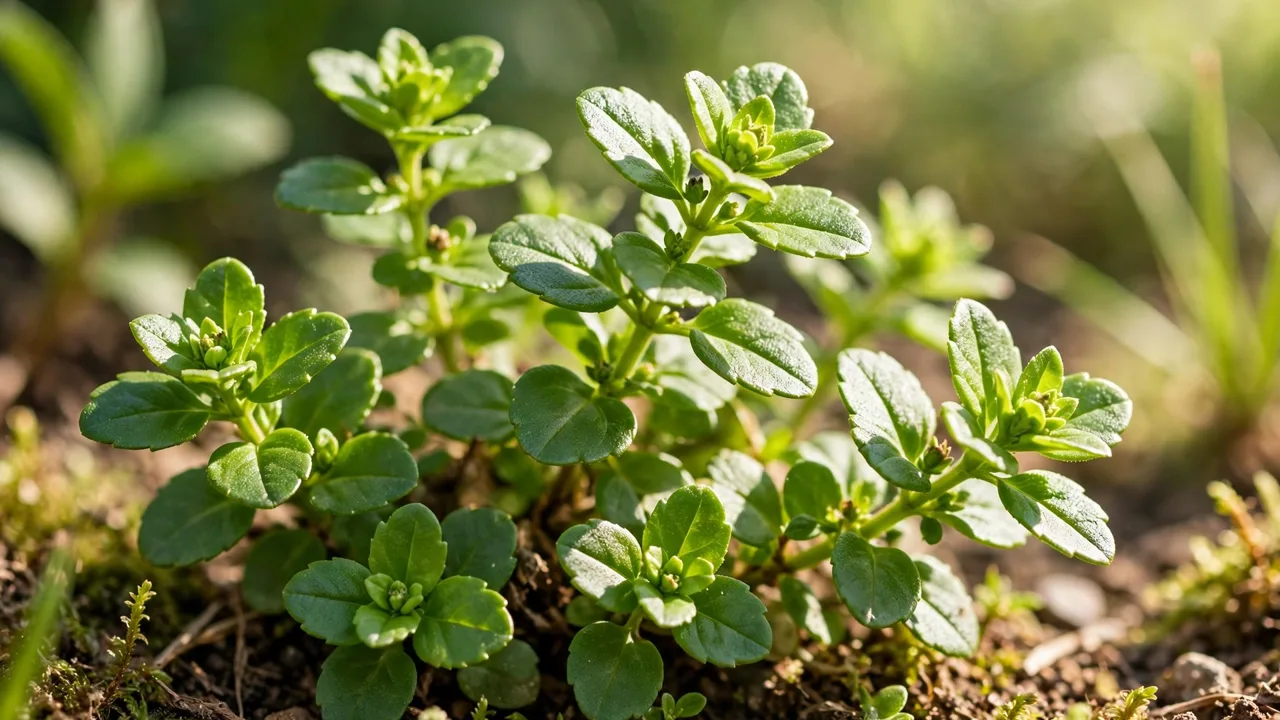
Bacopa is the herb for people who think in semesters, not in afternoons. If you need to be sharper at 2 p.m. today, close this page and read our focus stack guide instead — bacopa will do nothing for you by then. But if you are building memory support over a study term or a demanding quarter, bacopa has something most nootropics lack: repeated randomized trials pointing the same direction, provided you respect its one non-negotiable condition. Time. Eight to twelve weeks of it, daily, before you are allowed to judge.
What is bacopa and what are bacosides?
Bacopa monnieri is a small creeping wetland plant used for centuries in Ayurvedic practice, where it is often called brahmi and was traditionally given to scholars memorizing long texts. The compounds researchers track are bacosides, a group of saponins that make up the standardized fraction of modern extracts. Lab work links bacosides to antioxidant activity and to signaling involved in learning, but as with every herb on this site, the lab story only earns a hearing. Human trials decide.
Standardization is where shoppers get lost, so learn the label once. An extract standardized to 50 percent bacosides delivers roughly twice the bacosides per milligram of a 20 percent extract. Trials have used products across that range — roughly 20 to 55 percent — usually dosed to land in a similar daily bacoside neighborhood. A 300 mg capsule at 50 percent and a 600 mg capsule at 20 percent are not the same product wearing different clothes, and neither equals a spoonful of raw herb powder, which traditional practice dosed at five to ten grams a day. Compare bacosides per day, not capsule size.
| Extract style | Typical trial dose | Bacoside standardization | Time to judge |
|---|---|---|---|
| Standard extract, once daily | 300 mg/day | About 45 to 55% | 12 weeks |
| Standard extract, general range | 300 to 450 mg/day | About 20 to 55% | 8 to 12 weeks |
| Older-adult memory trials | 300 mg/day | Varies by product | 10 to 12 weeks |
| Raw herb (traditional) | 5 to 10 g/day | Not standardized | Not the trial evidence base |
What does the memory evidence actually show?
The consistent finding across systematic reviews is delayed recall: remembering a word list or new information after a delay. A systematic review of trials at 300 to 450 mg a day identified improved memory recall as the reliable outcome, and individual trials fill in the timeline. In a twelve-week study of healthy older volunteers, 300 mg a day produced significant gains in sustained attention and memory quality versus placebo from around four weeks, with attention effects clearer by eight weeks. Other trials report faster processing alongside the recall gains. Effects are modest — this is a nudge to a normal memory system, not restoration of a failing one.
Just as important is what the evidence does not show. It does not show same-day enhancement, and reviewers consistently note that the most dependable effects cluster in studies lasting twelve weeks or longer, with 300 mg a day the most common effective dose. It also leans heavily on older adults and on memory tasks rather than workplace productivity. Our supplement stack for studying guide therefore places bacopa as background support for a term of study, paired with sleep and retrieval practice, which outperform any herb by a wide margin. If your study technique is broken, bacopa will not fix it. Fix the technique first, then decide whether a slow herb still interests you.
Why does bacopa take so long to work?
Nobody has proven the full mechanism in humans, and honest guides should say so. The working picture from animal and lab research is gradual: antioxidant defenses, synaptic signaling, and stress-hormone effects that accumulate with daily exposure rather than spiking after one dose. Whatever the precise pathway, the empirical rule from the trials is unambiguous — studies designed around twelve weeks find effects; single-dose studies of memory do not.
Plan around that rule. Start bacopa at the beginning of a term, a project, or a training block, not in the final fortnight. Keep the dose and timing constant so your three-month judgment means something. Do not stack-start bacopa in the same week as alpha-GPC or lion’s mane and then credit whichever you read about last. One slow change at a time is slower marketing and better science, and it is how you avoid paying for three herbs to learn nothing about any of them.
How should you take it to limit stomach problems?
Take it with food, every time. Bacosides are lipophilic — they travel with fat — and bacopa’s commonest complaints are gastrointestinal: nausea, cramping, looser and more frequent stools, and dry mouth. Trials and practical guidance converge on dosing with a meal, ideally one containing some fat. Splitting 300 to 450 mg across two meals is an older pattern that some sensitive stomachs prefer; once daily with your largest meal is simpler and matches newer trials.
Expect a possible early dip. Fatigue and a subjective sense of slowness show up in some users during the first weeks, and some trial data hint at transient slowing before later gains. If fatigue persists beyond two to three weeks or interferes with work, stop and reassess rather than pushing through on faith. And keep perspective on magnitude: if bacopa helps you, the likely prize is somewhat better retention of what you studied — valuable across a semester, invisible on any single day. That is a fair deal at a fair price, and a poor one at a premium price wrapped in cure-all language.
What should a good bacopa product look like?
Since the trials used standardized extracts, product quality is not a side issue — it is the difference between testing bacopa and testing flavored powder. Look for the extract name or at least a stated bacoside percentage in the 20 to 55 percent range the trials used, the milligrams of extract per capsule, and whether the daily serving actually delivers 300 to 450 mg of that extract. Named extracts with published human work behind them sit at the transparent end of the market. Products that list bacopa inside a proprietary blend, with only a combined blend weight, cannot be matched to any trial dose and should be passed over, however impressive the surrounding ingredients look.
Heavy-metal testing deserves a specific mention for this herb. Bacopa grows in wetlands and can accumulate metals from its environment, and Ayurvedic products as a category have a documented history of contamination problems in regulatory testing. Third-party certificates for identity, heavy metals, and microbial limits are therefore more than a badge here — they are the minimum hygiene for a plant you plan to swallow daily for three months. Buy from sellers who publish those results per batch. If the price looks too good for a standardized, tested extract, the standardization or the testing is usually what was cut. Three months is a long experiment to run on an unverified powder, and the savings are small next to the cost of learning nothing from your own trial.
Can you combine bacopa with caffeine or other focus herbs?
Combinations are where bacopa most often gets misused, so here is the practical map. With caffeine, there is no known dangerous interaction for healthy adults, and the pairing is conceptually tidy — caffeine for today, bacopa for the quarter — which is how our focus guides deploy it. What you must not do is start both in the same week and then attribute every good or bad day to whichever you favor. Start bacopa alone for two weeks to learn its stomach signature, then layer caffeine timing on top of a stable base.
With sedating herbs and adaptogens, caution rises. Bacopa can cause fatigue in some users, and stacking it with ashwagandha, valerian, or prescription sedatives can add up to a grogginess nobody prescribed. With thyroid medication, combination is not a casual experiment at all, for the hormone reasons in the safety section. The general rule this site applies to every slow herb applies doubly here: one new daily variable at a time, weeks apart, with a note of what changed and when. Bacopa rewards patient people twice — once in its mechanism, and once in the clarity of what they learn from taking it properly.
Who should not take this?
Do not take bacopa if you are pregnant or breastfeeding or under 18 outside medical supervision — safety data in those groups are inadequate, and most trials are in adults. Talk to your doctor or pharmacist first if you take thyroid medication or have hyperthyroidism, because bacopa may influence thyroid hormone levels; if you take sedatives or anxiety medication, because effects may add; or if you take any drug cleared through liver CYP enzymes, which covers a large share of prescription medicines. People with slow heart rate, asthma, urinary obstruction, or stomach ulcers feature in traditional cautions for cholinergic herbs — raise them explicitly with your clinician rather than self-clearing. Bacopa does not treat ADHD, dementia, or memory disorders. Worsening memory deserves assessment. Talk to your doctor or pharmacist before starting.
Frequently asked questions
How long does bacopa take to work?
Eight to twelve weeks of daily use in most trials. Benefits for delayed word recall and retention were typically measured at twelve weeks, with some signals at four to eight weeks. Acute single doses do not enhance memory in the trial record.
What is the studied bacopa dosage?
Most human trials used 300 to 450 mg a day of an extract standardized to roughly 20 to 55 percent bacosides, taken with food, often split across the day in older studies and once daily in newer ones. Raw herb doses in traditional use are several grams and are not comparable.
Should bacopa be taken with food?
Yes. Bacosides are fat-soluble and bacopa commonly causes nausea, cramping, and loose stools on an empty stomach. Taking it with a meal that contains some fat reduces stomach complaints and matches how most trials administered it.
What are the common bacopa side effects?
Stomach upset leads the list: nausea, cramping, increased bowel frequency, and dry mouth. Fatigue or mild drowsiness is also reported, especially early on. Effects are usually mild and often settle within the first couple of weeks when it is taken with food.
Can bacopa interact with my medication?
Possibly. Bacopa may affect thyroid hormone levels and drugs processed by liver CYP enzymes, and it may add to sedative effects. If you take thyroid medicine, sedatives, or any regular prescription drug, ask your doctor or pharmacist before starting it.