
Lion's Mane: What the Small Human Trials Really Show
This page is for anyone tempted by lion's mane for focus or memory who wants the unvarnished version first: the human evidence is thin, the trials are small, and the gap between mushroom marketing and mushroom data is wide. That does not make lion's mane worthless. It makes it an optional experiment, well behind sleep, exercise, and the better-studied options in our [focus stack](/stacks/focus-stack/) guide. Read the trial table below before you spend anything.
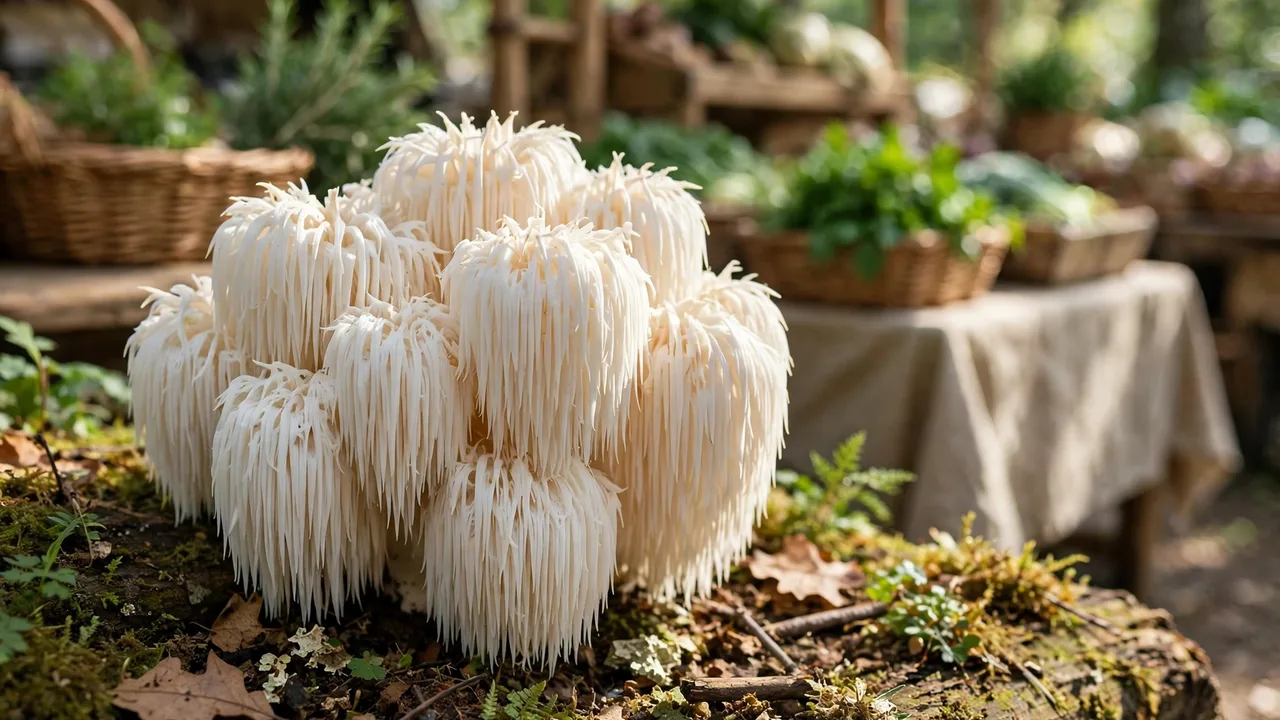
This page is for anyone tempted by lion’s mane for focus or memory who wants the unvarnished version first: the human evidence is thin, the trials are small, and the gap between mushroom marketing and mushroom data is wide. That does not make lion’s mane worthless. It makes it an optional experiment, well behind sleep, exercise, and the better-studied options in our focus stack guide. Read the trial table below before you spend anything.
What is lion’s mane, exactly?
Lion’s mane is Hericium erinaceus, an edible white mushroom that grows in shaggy spines instead of a cap. It has a long culinary and traditional-use history in East Asia. Supplement interest comes from two families of compounds, hericenones (found mainly in the fruiting body) and erinacines (found mainly in mycelium), which in cell and animal studies interact with nerve growth factor pathways. Nerve growth factor helps maintain neurons, so the leap to brain claims is easy to make in an advertisement.
Hold that leap at arm’s length. Stimulating a pathway in a dish or a rodent is not the same as improving memory in a person swallowing a capsule. Human pharmacology is messier: digestion, dose, product chemistry, and baseline health all intervene. Every claim on this page is therefore graded on human trials only, and by that standard the cupboard is nearly bare — a few dozen to about a hundred participants per study, weeks not years, and preparations that differ from trial to trial.
| Trial | Who was studied | Dose and length | What was found |
|---|---|---|---|
| Mori et al., 2009 | 30 older adults with mild impairment | 16 weeks | Better cognitive scores during use; scores fell after stopping |
| Saitsu et al., 2019 | Older adults | 12 weeks | Small improvement on one cognitive scale vs placebo |
| Docherty et al., 2023 | 41 healthy adults, 18 to 45 | 1.8 g single dose, then 28 days | Faster Stroop after one dose; no broad benefit at 28 days |
| Recent 8-week RCT | 109 adults, 40 to 75, with complaints | 2 g/day for 8 weeks | Modest gains in visual attention, sleep quality, and mood ratings |
What did the older-adult trials actually find?
The most-cited result is Mori and colleagues from 2009: thirty older adults with mild cognitive impairment took lion’s mane or placebo for sixteen weeks. The supplement group scored better on a cognitive scale at weeks eight, twelve, and sixteen — and then declined again within four weeks of stopping. That pattern suggests any effect depends on continued intake, and with thirty people total, it also suggests caution. Small trials overestimate effects as a rule.
Saitsu and colleagues in 2019 reported a significant improvement on the Mini-Mental State Examination after twelve weeks in older adults, again in a modest sample. Nagano and colleagues in 2010, using lion’s mane cookies for four weeks, found lower self-reported depression and anxiety scores in women — interesting, but a mood questionnaire in a small food-based trial is a long way from a focus claim for healthy workers. Taken together, the older-adult picture is best described as supportive of impaired function, not enhancement above a healthy baseline. If you are sixty-five with noticed slippage, the conversation with your clinician is different from a twenty-five-year-old chasing productivity.
What happens in healthy young adults?
Here the evidence mostly disappoints, and this page will not pretend otherwise. Docherty and colleagues ran a double-blind pilot with forty-one healthy adults aged eighteen to forty-five. After a single 1.8 g dose, participants completed the Stroop task faster. After twenty-eight days, the clearest signal was a trend toward lower subjective stress, not a package of cognitive wins. A separate four-week study in college-age adults found no cognitive benefit at all.
A 2026 narrative review pulling this literature together concluded plainly that current evidence does not support broad claims that lion’s mane improves cognition or memory in healthy young adults, and called for larger trials with chemically characterized preparations and pre-specified outcomes. We agree with that verdict. It is also why lion’s mane sits as an optional layer in our supplement stack for studying and focus stack for work guides — present, explained, and never load-bearing. Students in particular should hear this clearly: the week before exams is the worst possible time to start an unproven daily mushroom and attribute normal variation to it.
How does the product you buy change the answer?
Enormously, and labels make comparison hard. Fruiting body means the actual mushroom. Mycelial biomass often means mycelium grown on grain, harvested together with that grain, so a 500 mg capsule may contain substantial starch and little fungal material. Extracts vary in solvent, concentration, and whether hericenones or erinacines are measured at all. Beta-glucan percentages get printed prominently even though they are not the neuroactive compounds in the marketing story.
Practical rules follow. Prefer products that state the part used (fruiting body), the extract amount per serving, and third-party testing for identity and contaminants. Be wary of blends listing lion’s mane among eight mushrooms at a combined 500 mg — the per-species amount is trivial. If a brand will not tell you what is in the capsule, assume the trial doses above are not what you are getting. One gram to two grams a day of a defined fruiting-body product is the range recent trials cluster around; traditional culinary use is safe as food, but concentrated daily extracts are a different exposure.
How long should you trial it before judging?
If you decide to test it despite the thin record, run a fair test. Pick one product, take it daily with food, keep caffeine and sleep as steady as you can, and set a review date eight to twelve weeks out — matching the length of the positive older-adult trials rather than a hopeful long weekend. Judge it on something concrete you wrote down in advance: words recalled from a list, pages read with notes retained, error rate on a repeated task. Vague impressions after three days are marketing’s best friend and your wallet’s enemy.
Stop early for allergic symptoms, persistent stomach upset, rash, or any new symptom that worries you, and tell your clinician what you were taking. Do not extend the trial indefinitely because a podcast said mushrooms need six months. The trials that found anything found it by twelve to sixteen weeks.
What would stronger evidence actually look like?
It is worth knowing what would change this page’s verdict, because it tells you how to read the next headline. A convincing trial would enroll several hundred adults, not several dozen. It would use one chemically characterized preparation — stated fruiting-body or mycelium source, measured hericenone or erinacine content — instead of whatever powder a sponsor had on hand. It would pre-register a small set of cognitive outcomes, run for at least twelve weeks, and report effect sizes with confidence intervals rather than a scatter of p-values across twenty tests, where one or two will look positive by chance alone. It would also follow participants after stopping, since the Mori trial’s fade-out after discontinuation is one of the most informative details in this whole literature.
Until a trial like that exists, every confident sentence about lion’s mane and human cognition is borrowing credibility from petri dishes and rodents. That borrowing is exactly how the mushroom acquired a reputation its human data never earned. Animal work showing nerve-growth-factor activity is a reason to run human trials. It is not a reason to tell a student, a programmer, or a worried sixty-year-old that the effect is established in people. When a larger, better-characterized trial does appear — positive or negative — this guide will be updated to match it, and the current grading, thin and mixed, will either firm up or get weaker. That is how evidence is supposed to work, and it is the standard every ingredient on this site is held to.
Should you spend money on lion’s mane coffee and blends?
A quick word on formats, because most lion’s mane is sold as an experience rather than a dose. Mushroom coffees, focus drinks, and ten-species blends deliver pleasant rituals and, usually, per-ingredient amounts far below the 1.8 to 2 grams used in recent trials — sometimes a few hundred milligrams of a combined blend shared across many mushrooms. As beverages you enjoy, they need no defense. As cognitive interventions, they cannot borrow the trials’ results, because the trials did not test anything like them. If the label will not state the lion’s mane amount per serving, assume it is a flavoring decision, not a dosing one.
The same logic applies to gummies and shots, where sugar and convenience do the selling. Capsules and plain powders of a defined fruiting-body extract remain the only formats that let you replicate a studied intake and judge it fairly. That judgment discipline — defined product, defined dose, defined review date — is the difference between an experiment and a subscription. Run the experiment if the thin evidence still intrigues you. Skip the subscription either way.
Who should not take this?
Avoid lion’s mane if you have a mushroom allergy, and stop and seek care for hives, swelling, or breathing difficulty. There are no adequate safety data in pregnancy or breastfeeding, so skip it in both, and do not give concentrated extracts to children or under-18s outside medical advice. Check with your doctor or pharmacist first if you take diabetes medication, blood thinners, or immune-suppressing drugs, or if you have an upcoming surgery — mushroom extracts are biologically active, trial safety samples are tiny, and absence of reported harm in forty people is not proof of safety in you. Supplements do not treat cognitive impairment, dementia, depression, or anxiety. New or worsening memory problems need medical assessment, not a bigger mushroom dose. Talk to your doctor or pharmacist before starting.
Frequently asked questions
Does lion's mane improve memory in healthy adults?
Not reliably in the trials so far. Studies in healthy young adults are small and inconsistent — one pilot found faster performance on a single task after one dose, while a four-week college-age study found no cognitive benefit. The more favorable results come from older adults with existing impairment.
How much lion's mane did the studies use?
Recent trials used about 1.8 to 2 grams a day of fruiting-body or combined fruiting-body and mycelial material. Older trials used different preparations, which is part of the problem: doses and products are hard to compare across studies.
How long does lion's mane take to work?
The positive older-adult trials ran 12 to 16 weeks. There is no good evidence for a same-day focus effect you can count on, despite acute findings on single tasks in one small pilot. Judge it over weeks, if at all.
Is lion's mane safe?
Short trials report few side effects, mainly mild stomach upset, and one recent eight-week trial reported no adverse events in the lion's mane group. Long-term safety data are sparse, and mushroom allergy is a clear reason to avoid it. Pregnancy and breastfeeding safety are unknown.
Fruiting body or mycelium — which should I buy?
Trials mostly used fruiting-body preparations, so that is the closer match to the evidence. Mycelium-on-grain products can contain a lot of grain starch and few mushroom compounds. Whatever you buy, look for the part used and the amount per serving on the label.