
L-Citrulline for Pump and Performance: Doses and Timing
L-citrulline is the rare pre-workout ingredient whose reputation is mostly deserved — and whose label is mostly misleading. The amino acid itself does what it claims: it raises arginine and nitric oxide availability, supporting blood flow during training. The confusion is entirely about form and arithmetic, because "citrulline" on a front label can mean two different powders at two different effective doses. This page does the maths once, properly.
L-citrulline is the rare pre-workout ingredient whose reputation is mostly deserved — and whose label is mostly misleading. The amino acid itself does what it claims: it raises arginine and nitric oxide availability, supporting blood flow during training. The confusion is entirely about form and arithmetic, because “citrulline” on a front label can mean two different powders at two different effective doses. This page does the maths once, properly.
Citrulline is the base ingredient of the build your own pre-workout hub, and it pairs with beta-alanine in the classic duo covered at citrulline and beta-alanine.
What does L-citrulline actually do?
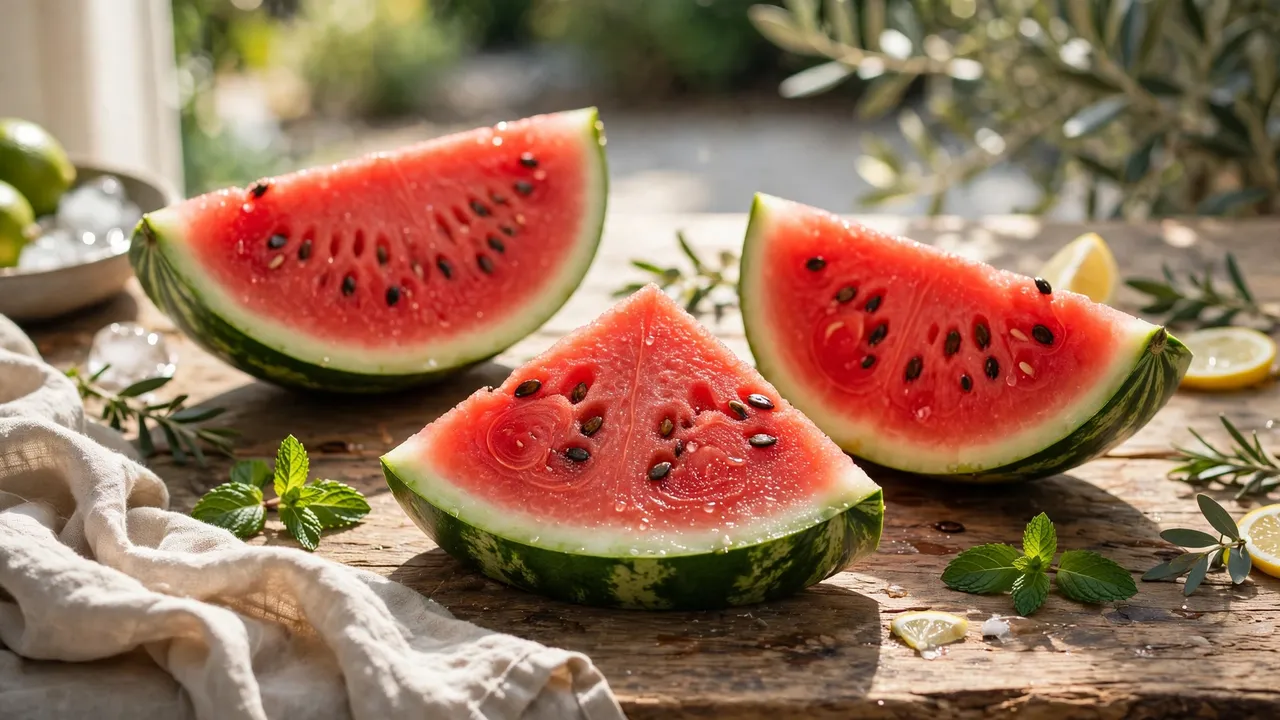
Citrulline is a non-essential amino acid — you make some, and you eat some (watermelon is the famous source, at roughly 1–3 g per kilo of flesh, which is why nobody eats their way to a study dose). Its route to nitric oxide is indirect and clever: absorbed citrulline largely escapes the liver, reaches the kidneys, and is converted to arginine. Arginine is the direct substrate for nitric oxide synthase. Supplementing citrulline raises plasma arginine more reliably than supplementing arginine itself, because oral arginine is heavily broken down in the gut and liver on first pass.
Nitric oxide relaxes blood vessel walls. During exercise, that supports blood flow to working muscle — the “pump” — and plausibly helps oxygen and nutrient delivery and metabolite clearance. Citrulline also participates in the urea cycle, which clears ammonia produced during intense exercise; ammonia accumulation is one contributor to fatigue. Those two pathways are the honest mechanism story: blood flow support plus waste handling, strongest for higher-rep resistance work and repeated efforts, modest in size, and not a strength miracle for single maximal lifts.
Citrulline vs citrulline malate — what is the real difference?
| Pure L-citrulline | Citrulline malate 2:1 | Citrulline malate 1:1 | |
|---|---|---|---|
| What it is | 100% L-citrulline | Citrulline + malic acid, 2 parts to 1 | Citrulline + malic acid, equal parts |
| Citrulline in an 8 g serving | 8 g | ~5.3 g | ~4 g |
| Dose matching the studies | ~6 g | ~8 g (delivers ~5.3 g) | ~10–12 g (rarely used) |
| Taste | Mild, slightly tart | Noticeably sour (the malic acid) | Sour |
| Best reason to choose it | Clean dose maths, most citrulline per gram | The form used in several endurance studies; malate may aid energy metabolism | Little reason — worst maths of the three |
Malate is not inert filler. Malic acid is an intermediate in the Krebs cycle, the aerobic energy pathway, and the theory that malate helps recycle the by-products of hard exercise is why citrulline malate was studied in the first place — notably an 8 g study (Pérez-Guisado and Jakeman, 2010) reporting more reps across barbell sets and less muscle soreness 24–48 hours later. Later trials and meta-analyses have been less dramatic, finding small benefits for muscular endurance in some protocols and null results in others. We rate the overall evidence as real but modest, with the largest effects in high-volume training — and we rate most labels as misleading, because a “6 g citrulline” claim that is actually 6 g of 1:1 malate delivers 3 g of citrulline, half the studied neighbourhood.
The buying rule is one line of arithmetic: multiply citrulline malate by its ratio fraction (0.67 for 2:1, 0.5 for 1:1) and compare the result to ~6 g. If the label hides the ratio, assume 1:1 and spend accordingly — or buy pure L-citrulline and skip the detective work. The DIY pre-workout recipe uses the pure form for exactly this reason.
How much should you take, and when?
For performance, the studied range clusters at 6 g of pure L-citrulline (roughly 3–6 g/day appears in vascular research; performance trials favour the top of that) or 8 g of citrulline malate 2:1, taken 30–60 minutes before training. Pharmacokinetic studies show plasma citrulline peaks within about an hour of ingestion, which is what that window reflects.
A few honest qualifications:
- Benefits are clearest for muscular endurance — total reps, later-set performance, time-to-exhaustion formats — and weakest for one-rep-max strength. If your training is all heavy triples, expect little; if it is sets of 10–15, expect a small but noticeable difference.
- Soreness reduction (roughly 40% lower at 24–48 hours in the best-known malate study) has not replicated consistently. Treat it as a possible bonus, not a reason to buy.
- No loading phase exists. Citrulline does not build a tissue store; it works on the day you take it. That also means rest-day dosing is unnecessary for performance goals — unlike beta-alanine, which must be taken daily.
What does it stack with?
Citrulline is the non-stimulant backbone, which is why it headlines the stim-free pre-workout stack for evening training. With caffeine, the pairing is straightforward — flow plus alertness, no known negative interaction at normal doses — and the combined framework is laid out in the build your own pre-workout hub. With beta-alanine, the pairing is complementary: an acute flow aid plus a chronic buffer, working on completely different timescales.
One pairing to avoid improvising: citrulline plus prescription nitric-oxide-pathway drugs. See the safety section — that is the one interaction with real clinical weight.
What does the research look like beyond the gym?
Citrulline’s nitric oxide pathway attracts research well outside sports, and an honest page should sketch it without inflating it. Small trials in older adults and in people with vascular concerns have examined daily L-citrulline (often 3–6 g) for endothelial function and modest blood-pressure reductions, with generally positive but preliminary findings. Studies in cycling and resistance training — the sports core — report small improvements in power or repetitions in some protocols and no effect in others; a 2021 meta-analysis of citrulline supplementation found a small benefit for muscular endurance outcomes and rated the overall effect as modest. Watermelon-juice studies, using naturally occurring citrulline at lower doses, have reported reduced post-exercise soreness in small samples. None of this amounts to a medical claim, and this site makes none: citrulline is a training ingredient with a plausible, partially proven performance effect and an interesting research afterlife. If you have a cardiovascular condition and are reading this page hoping citrulline is a treatment, it is not one — that conversation belongs with your cardiologist, and the interaction warnings below apply to you first.
How do you judge whether it is working for you?
Citrulline’s effects are real but small enough that vibes are a bad instrument. Pick two repeatable markers before you start: total reps on a fixed high-rep movement at a fixed weight (a set of leg press or push-ups to near-failure works), and your session RPE on a standard workout. Log them for two weeks without citrulline if you want a baseline, then for two weeks with 6 g taken 45 minutes before. If the markers do not move, citrulline is a pleasant-tasting expense for your training style, and dropping it is the evidence-based response — not doubling the dose. If reps climb by a couple on later sets and sessions feel more productive in the back half, you have the response the trials describe. Either way, you will know something true about your own physiology, which is more than a proprietary blend ever told you.
One last form note, because it decides real purchases: some products sell citrulline as a salt or blend with other amino acids, and a few hide it inside “pump matrices” of undisclosed size. The standard this page applies is simple — the citrulline content, in grams, printed as a number you can do arithmetic with. A product that cannot tell you how much citrulline it contains has answered your question about whether it contains enough. Buy the boring powder with the honest label, weigh it for the first week, and let the training log deliver the verdict.
Who should not take this?
Citrulline’s safety record at studied doses is good, but its mechanism creates a specific caution list:
- Do not combine it casually with nitrates or PDE5 inhibitors (such as sildenafil) or other vasodilators. All push the same nitric oxide pathway; additive blood-pressure lowering is the predictable result. If those medicines are yours, citrulline is a doctor conversation, not a purchase.
- If you take antihypertensive medication or have low blood pressure, discuss it first. Citrulline’s blood-pressure effect is modest in trials but real, and exercise itself lowers blood pressure post-session.
- Pregnancy and breastfeeding: safety data for supplemental citrulline are insufficient — skip it.
- Under-18s: no established need or dosing framework for performance use.
- Kidney or liver disease: amino acid metabolism is altered in these conditions; supplemental amino acid loads should be clinician-guided.
- Before surgery: disclose citrulline use to your surgical team, as you should for any supplement affecting blood vessels or blood pressure.
Gastrointestinal upset at high single doses (around 10 g and up) is the everyday limit — split or reduce the dose if your stomach objects. Beyond that, talk to your doctor or pharmacist about your own medications before adding citrulline to a training routine.
Frequently asked questions
Is L-citrulline better than citrulline malate?
Gram for gram of citrulline delivered, they are the same active ingredient. Malate's extra component, malic acid, is a Krebs-cycle intermediate that may help energy production, and some endurance studies used the malate form. The practical difference is dose maths: 2:1 citrulline malate is only two-thirds citrulline, so you need more powder for the same citrulline dose.
How long before a workout should I take L-citrulline?
About 30–60 minutes. Plasma citrulline and arginine rise within the first hour after ingestion, which is why the studies dose it in that window. Taking it with a small amount of food is fine if a full stomach of water and powder bothers you.
Can I take L-citrulline every day, or only on training days?
Most performance studies dose it acutely before training. Some blood-flow and blood-pressure research uses daily dosing of 3–6 g. There is no loading requirement — it does not saturate tissue stores the way creatine or beta-alanine do — so training-day use matches the performance evidence.
Does L-citrulline lower blood pressure?
It can modestly, via the nitric oxide pathway — that is part of why it is studied for vascular function. The effect is small in healthy people but relevant if you already take blood-pressure medication, nitrates or PDE5 inhibitors, or tend toward low blood pressure. That combination deserves a conversation with your doctor first.
What are the side effects of L-citrulline?
It is generally well tolerated at studied doses. The most common complaints are gastrointestinal — stomach discomfort, nausea or loose stool — mainly at higher doses (10 g and above) or on an empty stomach. Serious adverse events are not a feature of the trial literature at 3–8 g.